One of America’s first natural wineries · Since 2003
Our story
How one of America’s first natural wineries came to be, the movement it grew out of, wines from more than fifteen years ago, and the story of each 2025 wine in our winemaker’s own words.
Jared Brandt’s life was changed by one glass of Éric Texier’s wine. In 2001 he left a career in tech to make something real. In 2002 he moved to France and spent nine months in Texier’s tiny Rhône cellar, learning every part of winemaking. Texier had never taken anyone into his cellar like that before. Back in San Francisco, Jared Brandt and Tracey Brandt started Donkey & Goat together in 2003.
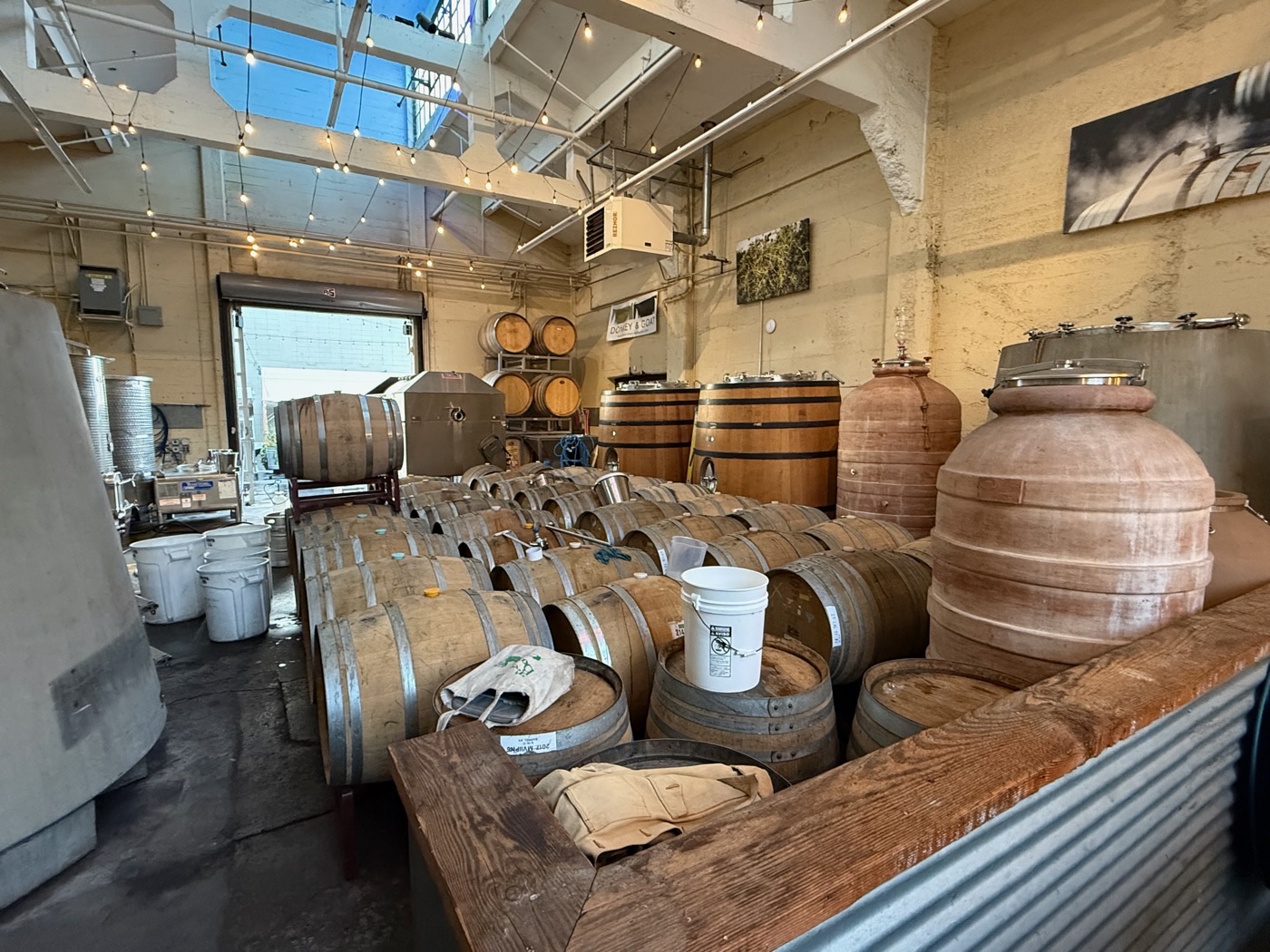
Donkey & Goat helped turn an industrial block in West Berkeley into what is now the Gilman Wine Block, a regional destination for locally made craft wine. From there it became one of the quiet but defining forces behind natural wine in America: expressive, site-driven wines made with transparency, integrity and minimal intervention, before “natural wine” even had a name.
How it started
The name Texier’s neighbor kept a donkey and a goat. The donkey did the hard work, weeding between the vines. The goat kept the donkey company, and a happy donkey works harder.
Six barrels The first wines were six barrels made in Michael Brill’s basement on Potrero Hill, with grapes from Brosseau Vineyard in Monterey and from El Dorado. When Brill started Crushpad, Donkey & Goat became a winery inside his winery. No investors meant no one could push the wines toward the big, ripe style critics were rewarding at the time.
Growers, not vineyards Donkey & Goat chose not to buy vineyards. It works with growers who farm without chemicals, and it calls the pick dates. Over the years the focus narrowed to sites north of the Bay: the Sierra foothills, Mendocino and Napa.
Nothing added Native yeast, no additions, and at most a little sulfur. One year a few tanks got commercial yeast as a test. That wine never finished fermenting, and it was poured out rather than fixed with more additions.
Pushing the edges 308 days on the skins for the 2017 Alveare Marsanne. Wine aged in Italian clay vessels shaped like beehives. A Syrah with no added sulfur at all.
Firsts that shaped American natural wine
Pét-nat The first commercially released pét-nat in the United States, in 2009
Skin contact Helped popularize skin-contact white wines, starting with Stone Crusher Roussanne in 2009
Chillable reds Among the first, with Twinkle in 2015
Lower alcohol Championed lower-alcohol winemaking in California
Ingredients Among the first American wineries to list ingredients on the label
2001
Jared Brandt leaves tech to make something real.
2002
Nine months in Éric Texier’s Rhône cellar, learning natural winemaking.
2003
Donkey & Goat starts in San Francisco: six barrels in a Potrero Hill basement, then a winery inside Crushpad.
2004
Donkey & Goat becomes the first winery in Berkeley, at 2323-B 4th Street. The space is now home to Maître de Chai.
2009
The first commercially released pét-nat in the U.S., and Stone Crusher, an early skin-contact white.
2011
In July the winery and tasting room open at 1340 5th Street, the old enamel factory. The first Lily’s Pét-Nat.
2013–24
Broc Cellars locates down the block (2013), later followed by Hammerling (2018) and Tessier (2024). Donkey & Goat starts First Fridays.
2015
Twinkle, one of the first chillable reds.
2017
The Alveare Marsanne spends 308 days on its skins.
2025
Michael McCullough, in his first vintage as winemaker, releases what Jared calls the best wines ever released by Donkey & Goat.
From the library
Go back in time
Natural wine is supposed to be drunk young. Ours ages. We’ve held back bottles from more than fifteen years ago, and founding winemaker Jared Brandt tells you where each one came from and how it tastes now.
“It’ll give you a broad perspective of what I was interested in as a winemaker in 2012.”
Jared Brandt
2012 · the second harvest on 5th Street
Four wines from 2012
“2012 was a Goldilocks vintage in Anderson Valley. Ideal conditions: a long growing season and a good crop. El Dorado was a large crop with a hot season. I picked early in El Dorado.”
Jared Brandt
El Dorado · Apple Hill · $70
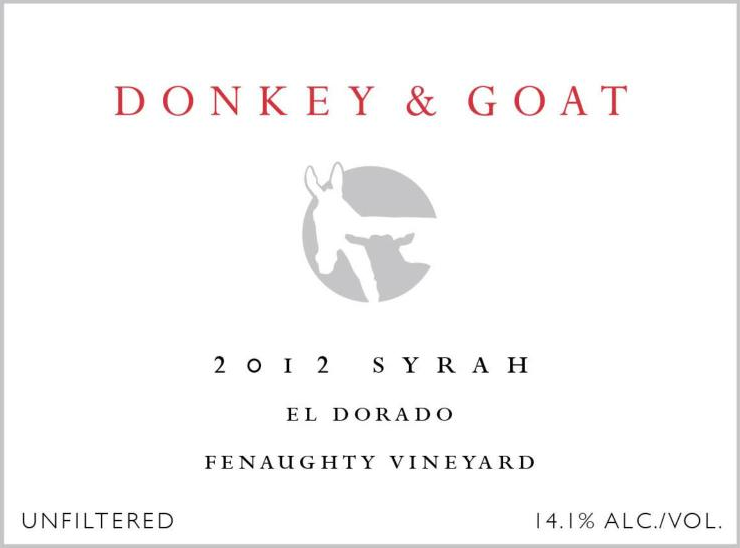
2012 Fenaughty Syrah
“You almost can taste the dust.”
It was grafted over from Gewürztraminer many, many years ago by a guy named Ron Mansfield. This clone in particular changes color when it’s ripe. It goes from a really, really deep black-purple to having a gray sheen.
In the glass now: When I taste the wine, I actually taste that location. It was bottled unfiltered and unfined, and it has dropped a lot of sediment. So when you open it, watch out.
Mendocino Ridge · Hogpen block · farmed by Steve Alden · $70
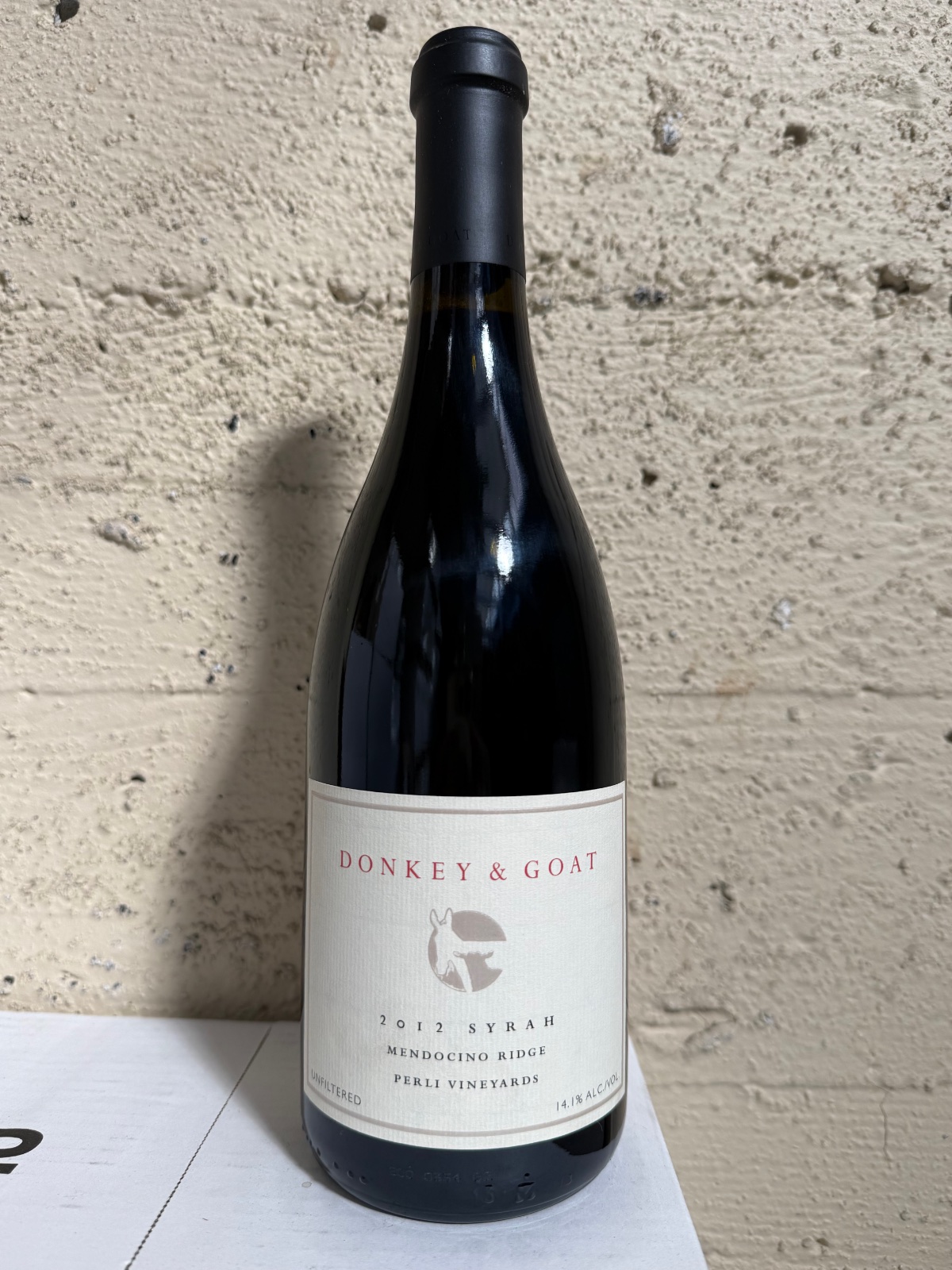
2012 Perli Syrah
“Talkative, big and burly, but a gentle soul at the same time.”
That’s the section called Hogpen, because it’s where there was a hog pen for the settlers. It’s totally off the grid. Cell phones don’t work. The power is solar.
In the glass now: Super aromatic, in a classic Côte-Rôtie, Saint-Joseph kind of way. I get a little bit of those olive-y components, also some berries.
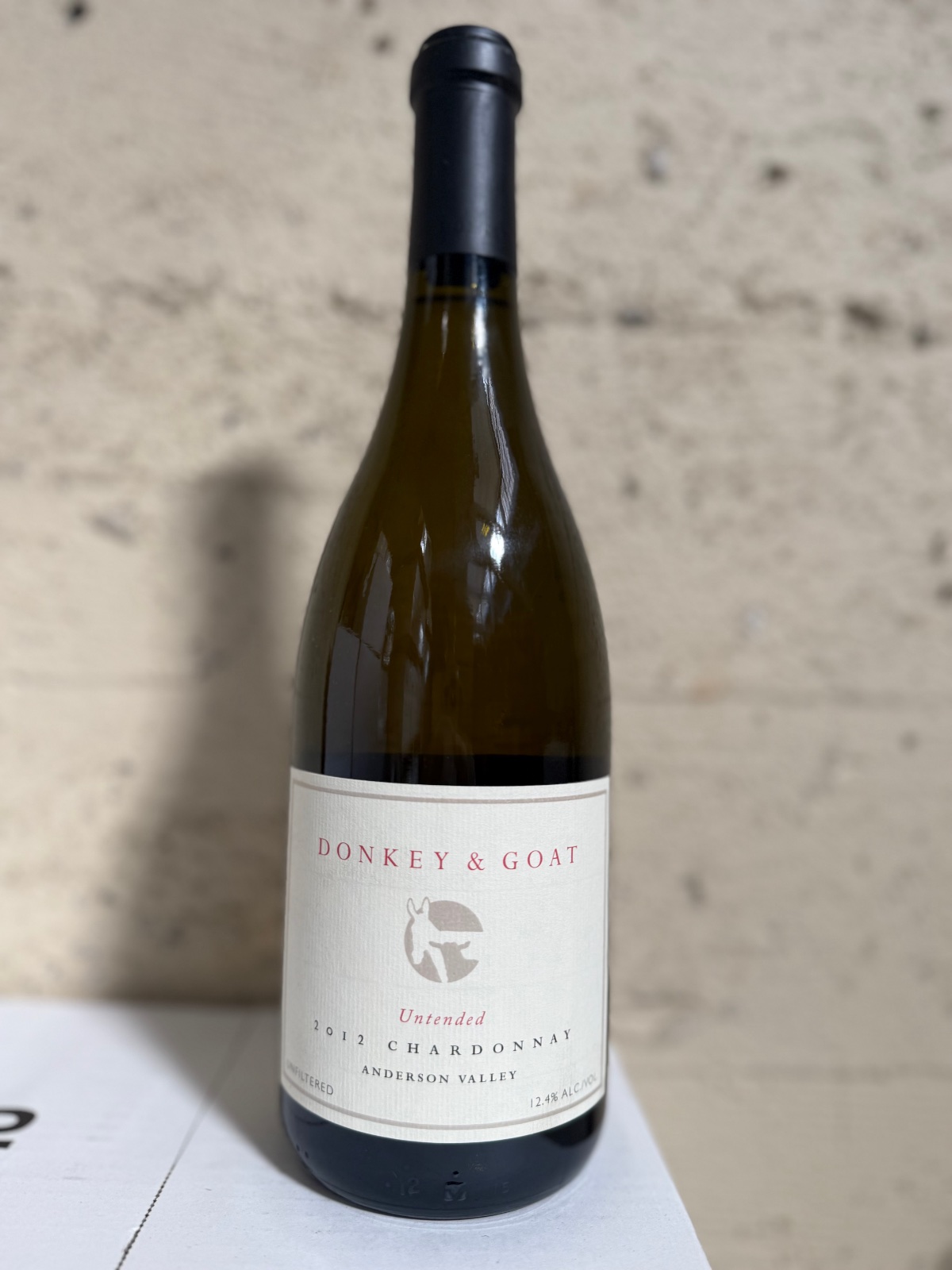
We’d drive by, and there was this vineyard that was untended. The fence was kind of screwed up and the vines were really wild. So I started jumping the fence and tasting.
In the glass now: It was pretty high acid. Deep Anderson Valley, lots and lots of fog, and just a wonderful location. I think it’s aged beautifully.
Michael told us how each 2025 wine was made: the picks, the press, the barrels, and what to expect in five or ten years. Open any wine to read it.
Russian River Valley · Club release
NDA Chardonnay
“Completely separate from my involvement in making it, it’s what I want to drink 95% of the time.”
Winemaker notes
I don’t want to have a favorite child, but of all the current releases, I’m 100% reaching for the Chardonnay. It’s really beautiful the moment you open it. But sometimes I’ll pour a glass, recork the bottle and leave it in the fridge for 24 hours, so the oxygen has a chance to work its magic. Then on day two, boom. It’s just so good. It’s what I want to drink 95% of the time.
It’s classic. Lean, bright, mineral, crisp.
The NDA was our first pick of the year, on August 18th. I hadn’t hired my harvest help yet, so I was in the building on my own, figuring out a new press, when this really beautiful fruit came in. It was all very quiet. We’re not in a position to discuss where the fruit comes from, but it’s a really reputable, incredibly distinguished site, especially for Chardonnay. It has a tremendous amount of tension, acid and freshness.
We picked early, somewhere between 20.5 and 21 Brix, with just about a perfect pH. It looked lean, but the phenolic maturity was there, and it was spot on for the kind of Chardonnay we love to make at Donkey & Goat.
Our press doesn’t go above 1.6 bar, so it’s a really, really gentle press. I did a long, extended press and went for quality, not yield. We didn’t get greedy. We chose all neutral barrels and gave it a long time on the lees, with no stirring and no bâtonnage. No sulfur at crush, none through aging. On a wine that can be this lean, that time on the lees is where the breadth comes from. That’s why, at 12.2% alcohol, it has real balance and breadth on the palate along with that crushed oyster shell minerality. There’s no new oak at all.
I don’t want my winemaking style to be on display. I want to elevate the fruit, the vintage and the site, and I think the NDA is really true to that.
It’s just been bottled and it’s drinking beautifully now, but I think this wine could go a long, long time. If you have the patience to cellar it, I think it’ll be fantastic in 10 or 15 years, so feel free to tuck a couple away. It’s a pretty small production, and yields were so low in 2026 that we didn’t get that fruit. Hold on to it, and hopefully we’ll see it again in 2027.
“Everyone else had picked, and I kept saying, we’ll wait, we’ll wait.”
Winemaker notes
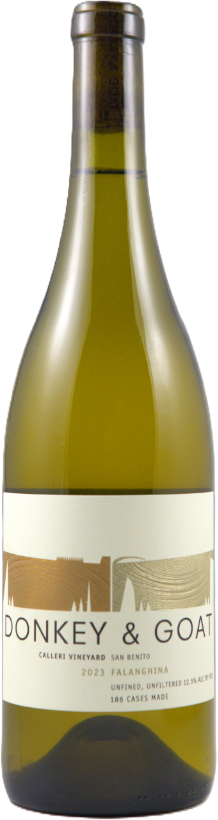
We picked the Falanghina in the second week of November, the day before the rain. In a normal vintage this fruit comes off in the second week of September, so we were two months past that. Wild, right? It was a really unique year.
Two weeks earlier it was at about 20 Brix and a 3.0 pH, and the seeds were just starting to brown. I think a lot of people rushed to pick right then. But I was patient. Everyone else had picked, and I kept saying, we’ll wait, we’ll wait. Finally, in the middle of November, with the rain coming, the pH got to 3.1, the skins were looking right, the color was there and the seeds were brown. It was barely 20.6 Brix. We were ready to go.
The fruit does eventually get where it needs to be, but boy, does it take its time. You have to have the courage and patience to give it a chance, because 99% of the time in California you’re not fighting to get something ripe. We can grow almost anything here. Waiting and picking when we did is a big part of what ends up in your glass.
It fermented in stainless steel and then aged in neutral barrel. It had just about enough acid to strip the enamel off your teeth. Very, very pretty, more stone fruit, and plenty of ripeness even at that Brix. For the last three months in barrel, I stopped topping it. I kept it sealed. I didn’t open it, didn’t taste it, didn’t touch it. The idea wasn’t to oxidize it, but to allow a slow oxygen exposure that brings in a tiny bit of what I find inspiring in the Italian examples. The goal isn’t to be Italian, but the grape has a home, and there’s something to learn from the way it’s been made there for all these years.
So you smell the wine and it’s stone fruit. Taste it: tons of acid, a tiny bit of that classic Italian bitterness, and then almond skin on the finish, very much in the background.
The pH finished around 3.2, so the wine is rock solid. I see it holding well for 8 to 10 years, and beyond that, who knows where it goes. If a wine really speaks to you, buy six, buy a case, put it down and watch it evolve.
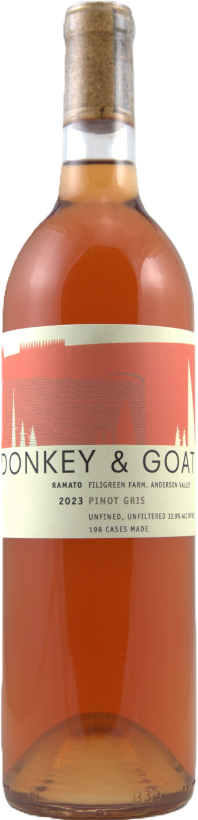
Skin-ferment Pinot Gris, Dennison Vineyard, Anderson Valley · Club release
Ramato
“This year, though, I did something I don’t think has ever been done with it.”
Winemaker notes
This year I did something I don’t think has ever been done with this wine. I kept it 100% whole cluster in the foudre.
Ramato is inspired by the northern Italian versions of Pinot Gris, where for a long time they’ve macerated it on the skins for various lengths of time. That’s what gives it the color. Ramato is the Italian word for copper.
I sealed it up, whole cluster, whole berry, uncrushed, in our foudre, a large wooden vessel. As soon as fermentation took off, I started doing little bucket-overs, moving the free run juice over the top while keeping everything whole. After about five days I got into the tank and gently foot-trod it, just until I saw enough juice rise to the top, but not so much that we crushed all the fruit. Then back to bucket-overs, and two days later we pressed. Seven days on the skins altogether, but a really, really gentle extraction.
The press died while we were pressing this wine. It was late at night and about 80% of the way through the cycle, but it stuck at 1.2 bar and just pressed and pressed and pressed. So while we were fixing it, I was tasting to decide when we’d finally cut it. That’s a very unique thing to happen while you’re making a wine.
If you taste the free run on its own, after all that time with the stems, it has a lot of tannin. But I know there’s this beautiful, expressive juice inside those whole berries. When you press it, all of that comes out, and you get the balance of finely woven tannin and all these layers of fruit. Then it ages in barrel, the tannin softens even more, and the fruit moves from that really primary place into something deeply expressive and lifted.
It’s more copper in color than previous vintages, likely from the whole cluster. It’s very much rose petal and potpourri. People who love Earl Grey tea will love this. There’s fine-grained tannin, plenty of acid to boot, and a briny character that I quite love. We just bottled it, and it’s still finding itself. But I think this has got a long life.
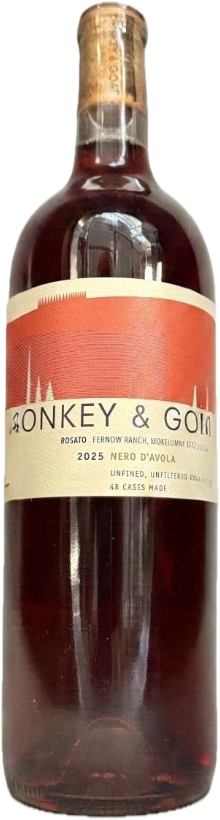
Fernow Ranch, Mokelumne River · Members only · Club release
Rosato of Nero d’Avola
“The more I tasted it, and the more it evolved with time and patience, the more abundantly clear it became that this wine was meant to be just as it is.”
Winemaker notes
This is a particularly special wine, and a first release for us. We’ve never made Nero d’Avola this way. It’s a tiny production: two barrels. Once you’ve done all your topping and racked it off the lees, it comes down to a little under 50 cases. So it’s extremely limited, and it’s something we’re really excited to share with you.
We had a small amount of Nero come in, and I was still trying to get my head around this site and how the grape would perform. So I split it into two lots. One is still in barrel, a red wine: 100% whole cluster, left for three weeks of maceration. It’s extremely floral and very pretty, but it has serious tannin, so we’re giving it extended time in barrel to keep softening.
The other half is this Rosato. It came in, we foot-trod it right away, let it sit for three days and pressed it. It hadn’t technically started fermenting, but you still get this really beautiful color and a very pretty, very delicate tannin structure. If you’re familiar with Cerasuolo from Abruzzo, it has that same distinct, explosive dried cherry, a tremendous amount of acid, and very fine-grained tannin.
It’s from Lodi, and you think hot. You think about how wines there can go very quickly from having all that tension to being slightly flabby. This one holds its acid all the way through ripening. When you’re there, you’ve got a constant breeze coming off the Delta. Jake opens up the canopy, so it can be 100 degrees out, but in the fruit zone it’s like a fan blowing through, and it stays closer to the high 80s. He’s farmed it organically from the start. He’s a very observant, thoughtful farmer, constantly learning and not dogmatic.
Early on, I imagined I might blend the two lots. But at the blending table they were like two puzzle pieces that were close, and putting them together took away from both. The sum of their parts was less than each on its own. If you go in thinking you know exactly how it’s going to go, you get humbled quickly. The more I tasted, the clearer it became that this wine was meant to be just as it is.
We just bottled it. It’s a baby, and it has that tension. I make wines with the intention for them to endure, and this one is no exception. It’ll keep improving over five years and beyond. I think the dried cherry may become even more pronounced with time, so if you love that, let it sit. If you’re hesitant about it, drink it while it’s fresh.
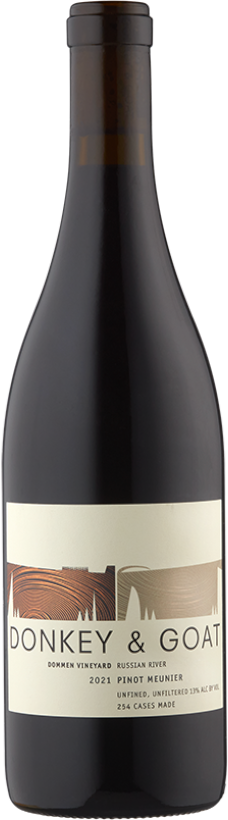
Dommen Vineyard, Russian River Valley · Club release
Pinot Meunier
“Of all the wines we’ve released, I think this one has the ability to go for probably 20 years.”
Winemaker notes
Of all the wines we’ve released, I think this one has the ability to go for probably 20 years. It’s got everything: the acid, the tannin, the ripeness. It’s not overly grippy, but the tannin is distinct and present. You have to be interested in that exploration of tannin, and have a mind toward ageability, to really enjoy this wine. If you have the patience, it has the legs to go 10, 20 years, easy.
2025 was my first time working with Pinot Meunier, but I’ve been a massive fan of the grape for many years as someone who enjoys drinking wine. It’s mostly known as one of the three Champagne varieties. It makes absolutely stunning sparkling wines, and the still Coteaux Champenois wines from the region have very much captured my heart.
At Donkey & Goat, we’ve made it into a red wine with quite a bit of structure. Out of respect for that tradition and lineage, I didn’t try to reinvent the wheel. I kept it 36% whole cluster on the bottom, all of it staying whole berry, with destemmed fruit on top. We did punch-downs throughout primary fermentation, with a couple of pump-overs in the middle.
It’s a serious red wine from California: red fruit, tannin, incredible acid, at pretty decent levels of ripeness without going into an excessively opulent category. It’s the wine for people who are excited about food-focused pairing wines and about trying a different variety with a very serious expression.
The Dommen vineyard is a mainstay here at Donkey & Goat. It’s in Windsor, part of the Russian River Valley, and when you hear that you think it’s probably quite hot. It does have the warmth, but the acid is insane. The Pinot Meunier was planted in the ’90s, originally for large-scale sparkling wine production. The oldest plantings on the vineyard go back to the early 1920s.
As it ages, I think the fruit will shift from this primary expression into more evolved characteristics, with the red fruit starting to intermingle with forest floor, mushroom or leather. Honestly, I’ve never had a 20-year-old red Pinot Meunier. My hypothesis is it might go somewhere like Pinot does. We’ll just have to see.
Sparkling Chardonnay, Conzelman Vineyard, Anderson Valley · Club release
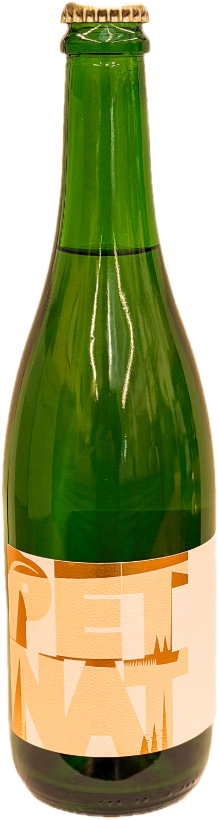
Lily’s Pét Nat
“We’ve been making pét nat at Donkey & Goat for pretty much as long as anyone in the United States, possibly the longest in a commercial way.”
Winemaker notes
We’ve been making pét nat at Donkey & Goat for pretty much as long as anyone in the United States, possibly the longest in a commercial way. And the entire time, this wine has been made from the Conzelman vineyard, in the Deep End of Anderson Valley. As you pass Navarro on Highway 128, heading out toward Highway 1, it’s just before you get to that beautiful section of road where the redwood trees engulf you.
It’s a cool-climate site, and there’s tremendous acidity in these vines, which are now 48 years old. They have big, burly-looking trunks and a very high trellising system. With enough hang time, we still get this very complex, tropical fruit component while maintaining this sort of stellar acidity.
In my opinion, pét nat can be really boring if you pick it too early. It’s light and easygoing, and it has this chalky, flinty component to it. That’s what happens when you pick pét nat really early: it doesn’t show place and doesn’t have a lot of character. But if you pick it late and you don’t have the acid, you get more character and more complexity, but typically it loses that backbone and acidity. Pét nats almost never finish bone dry, so whatever acid is there gets covered up by the sweetness, and you get this overly rich, flat wine. Those are the two ends of the spectrum, and you don’t want either. But this site has an abundance of ripeness and an abundance of acid.
We let it rest for a good six months before we riddled it in the springtime, which in our form is just a lot of shaking and banging on tires. Anyone who comes by the winery on those days thinks, this surely can’t be how you guys make wine. It looks like monkey play. We take rubber mallets, and we take a tire.
This year, for the primary fermentation, we filled the bottles so there was almost no headspace, just enough that there wasn’t so much pressure that every bottle exploded, which thankfully didn’t happen. So when we disgorged, we were able to do little to no topping in some cases, and just cap them right away. We think that’s why these bottles have such a distinctly high level of CO2 and a low level of oxygen pickup. A lot of people now say this is more like traditional method than they’re used to from pét nat.
I’m very happy with this wine. And again, no sulfur additions, no additions whatsoever. This is zero-zero.
We commit to building a workplace rooted in trust, curiosity, and care, where every team member is valued for their voice, creativity, and contribution. This winery is a platform for collaboration — a place where ideas are welcomed, knowledge is shared, and individual efforts support the collective whole.
Before natural wine was a trend, it was a reaction to chemical, industrial winemaking, and it’s still a choice about how land is farmed, what goes in the bottle, and who you support.
01
A reaction to chemistry
After World War II, synthetic pesticides and a growing arsenal of cellar additives spread through European wine. In Beaujolais, Jules Chauvet warned that this chemistry stripped wine of its place. Marcel Lapierre, Jean Foillard, Jean-Paul Thévenet, Guy Breton and Joseph Chamonard, the “Gang of Five”, took up his ideas: no additives, native yeast, no fining or filtering, no added sulfur.
02
What’s not on the label
U.S. law allows dozens of additives and processing aids in wine, from cultured yeast and acid to grape concentrate, oak chips and animal-based fining agents. Only sulfites have to be disclosed. Natural wine is the answer: grapes, and at most a little sulfur.
03
Farming first
It starts in the vineyard: organic and biodynamic farming, no synthetic sprays, soil that’s built up instead of worn down. Biodynamics treats the vineyard as one living farm, following Rudolf Steiner’s 1924 lectures.
04
California, and us
The idea reached California through pioneers like Paul Frey, Tony Coturri, Steve Edmunds, Kevin Kelley and Jared Brandt. Donkey & Goat began in 2003 as one of the country’s first natural wineries. After 2008 it became a movement, and for a new generation of Bay Area winemakers natural wine is protest art.
“Their wines go beyond all current definitions of our ‘sense of place’ and incorporate a sense of purpose.”
Andrew Sullivan, Natural Wine as Protest Art
For these winemakers, how a wine is farmed and made is a statement about how we could live: small, local, fair. Berkeley gave the country farm-to-table. Donkey & Goat has spent twenty years asking for the same respect for what’s in your glass.